How do you write the history of a displaced society when sites of memory have been destroyed, libraries looted, and archives made inaccessible? Tracing the evolution of Palestinian historiography is to analyse responses to this enduring challenge.
Articles
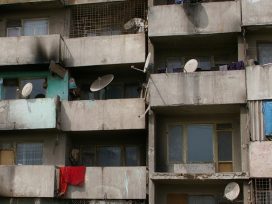
Far-right disinformation targeting Roma communities in Bulgaria and Romania taps into existing fears of discrimination, doubling up prejudice. Can community support bring the much-needed equilibrium to restabilize progressive social programming?

Though the development is uneven, the direction of travel is clear, as coalitions between conservative and far-right parties become the more viable option at both the national and European levels.

Revisiting Georgia’s history of higher education offers a way of understanding both the country’s European aspirations and the obstacles that stand in their way, says the rector of Tbilisi’s Ilia State University.
Recommended topics

From punk rebellion to happy consumerism
Utopia and alternatives in Chinese popular culture
From late-90s punk to ‘Happyism’, the trajectory of former The Flowers front-man Wowkie Zhang exposes a dialectic typical of China’s mainstream: alternative impulses constantly surface, are monetised, then recur in new guises.
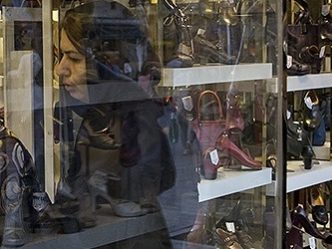
Talking with atheists and religious minorities explodes the myth of a homogenous Islamic Republic of Iran. But secular views remain otherwise concealed – some parents hiding their convictions even from children, who may not understand the need to lie for their safety.
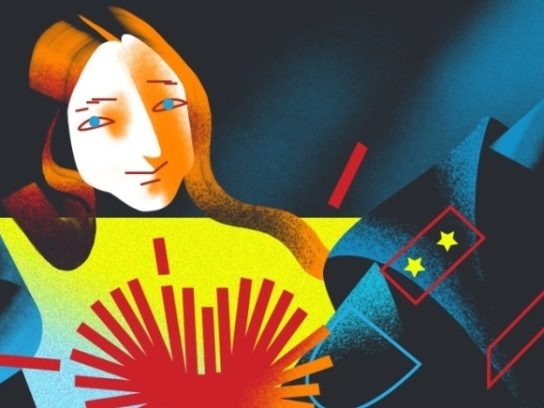
Women sentenced to time behind bars is on the rise under Putin. While male convicts are being offered their freedom to fight on the front line against Ukraine, even mothers with underage children aren’t being pardoned. For those incarcerated for anti-war activism or poverty-related crimes, solidarity campaigns provide crucial lifelines.
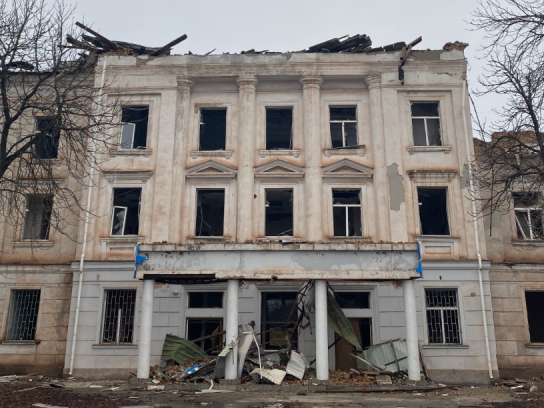
When citizens are the targets of direct military action, humanity suffers alongside those under fire. First-hand insights of travelling to Ukraine’s war zones are reminders of just how close Russia’s ongoing war is.
Eurozine review

The Church of Leo
Il Mulino 2/2026
Leo XIV’s Augustinian style of communication; what to expect of the unexpected pope; prospects for women’s equality; the demise of the Catholic intellectual.
A laboratory of attention
Sodobnost 6/2026
The art of compassion in the digital age; multilingualism and culture in Slovenia; Green futures in China; conversations in The Gambia.
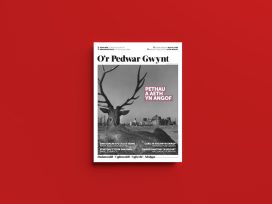
Romance on the edge of Europe
O’r Pedwar Gwynt 1/2026
Gwen John’s competing passions; a sunny vision of Wales; Jules Verne’s Scotland; intergenerational trauma in Belfast.


Focal points

Cultural reflections on contemporary warfare: from sanctions, human rights abuses and peace negotiations to recruitment, rearmament, autonomous weapons and civil protection mechanisms.
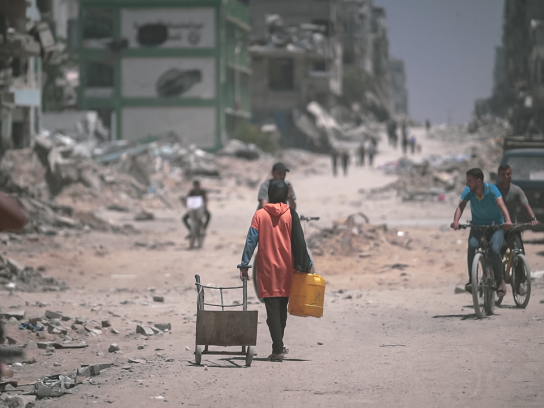
An ongoing series in Eurozine discussing questions raised by the 7 October Hamas attacks and Israel’s devastating war on Gaza. The series offers a sample of articles published in the wider Eurozine network and represents diverse perspectives, above all Palestinian and Israeli.
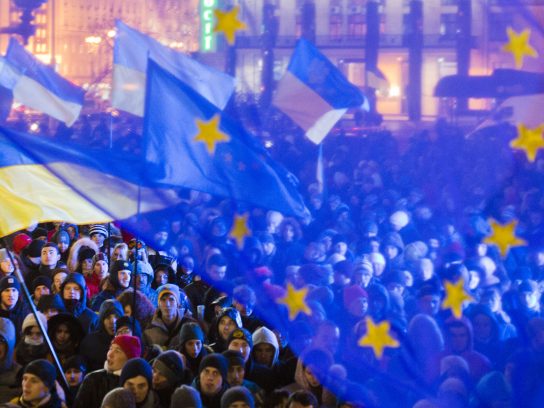
Post-revolutionary Ukrainian society displays a unique mix of hope, enthusiasm, social creativity, collective trauma of war, radicalism and disillusionment. With the Maidan becoming history, the focal point ‘Ukraine in European Dialogue’ explores the new challenges facing the young democracy, its place in Europe, and the lessons it might offer for the future of the European project.
Inspired by a lecture that Clifford Geertz delivered in 1995 at the Institute for Human Sciences in Vienna, this focal point engages with ‘deep diversity’, ‘a sense of dispersion, of particularity, of complexity and of uncenteredness’ rather than unified world order. It follows the launch of a research programme of the same name at the institute in January 2023.